






Why it matters: If finalized, the listing would make it illegal under federal law to take, import, export or sell either salamander, two small stream-dwelling species the agency says face drought, severe heat and wildfire along with habitat loss from roads, culverts and timber harvest, according to the Federal Register filing.
The U.S. Fish and Wildlife Service has proposed listing the Cascade torrent salamander and the Columbia torrent salamander as threatened species under the Endangered Species Act, according to a proposed rule filed for public inspection on Nov. 27. The rule is scheduled to be published in the Federal Register on Nov. 30, and comments are due 60 days after that date.
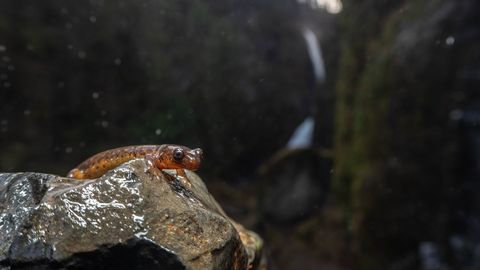
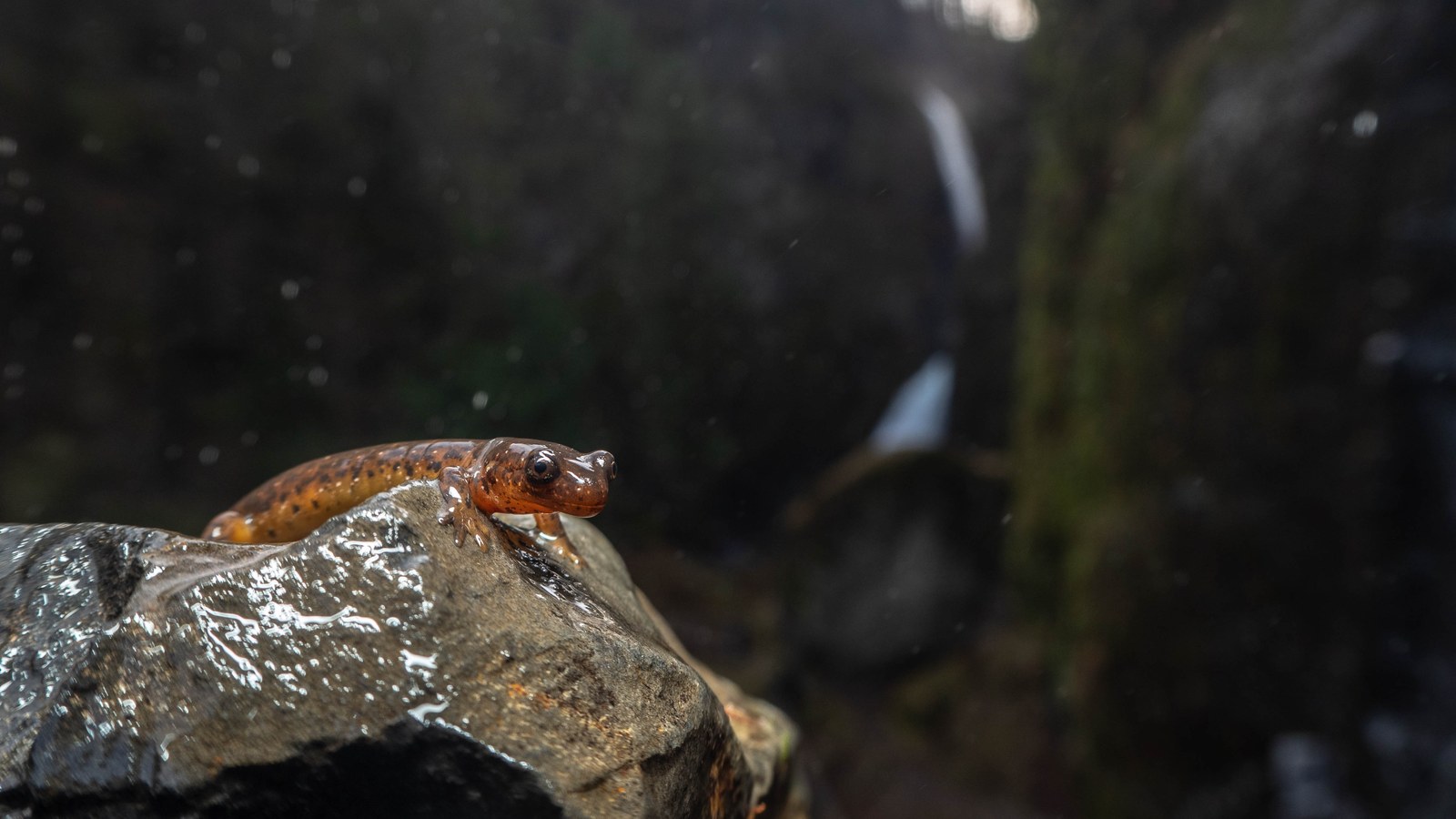
Range and habitat. Both are small, semi-aquatic salamanders found only in Washington and Oregon, the agency says. The Cascade torrent salamander is found on the western slope of the Cascade Range in southwestern Washington and northwestern Oregon. The Columbia torrent salamander is found in the coast ranges of northwestern Oregon and southwestern Washington. They are found in and around small streams, seeps, waterfalls and splash zones in humid conifer forests, and take about 5 to 8 years to reach maturity.
Why the agency acted. The service said both species meet the law's definition of a threatened species because of drought, severe heat and wildfire, and the loss or degradation of habitat from roads, culverts and timber harvest. It described torrent salamanders as among the North American salamanders least able to tolerate drying out and heat. In a 2019 survey, Cascade torrent salamanders were found at 16 of 48 historical sites, and in 2022 at 38 percent of 65 historical sites surveyed. The proposal serves as the agency's 12-month finding on a July 11, 2012 petition to list 53 reptile and amphibian species, including both salamanders.
What the rule would do. A special rule under section 4(d) of the act would make it illegal to take, import, export or sell either salamander, or to move them in interstate or foreign commerce. It would allow work that restores natural streamflow, such as removing or replacing pipe culverts with open-bottomed culverts or bridges that mimic a natural stream, when the work follows the service's best practices and is part of a finished conservation plan for the species.
Critical habitat later. The service said designating critical habitat for the two species is prudent but not yet determinable, and that it will work with partners to gather the data needed. The law allows the agency one more year to publish a designation in that case.
What comes next. Comments can be filed at regulations.gov under docket FWS-R1-ES-2024-0121, and written requests for a public hearing are due 45 days after publication.
Sources
- Federal Register public inspection: Endangered and Threatened Wildlife and Plants; Threatened Species Status with Section 4(d) Rule for the Cascade and Columbia Torrent Salamanders, document 2026-24220
- Official PDF, Federal Register document 2026-24220
How we checked this: We read Federal Register document 2026-24220 as filed for public inspection (filed Nov. 27, 2026, scheduled for publication Nov. 30), in its official PDF and API record, saved Nov. 28 at about 1:10 PM ET, and checked every date and number in this story against that copy.
See something wrong? Tell us and we'll fix it. Every fix is dated and listed on our Corrections page.